
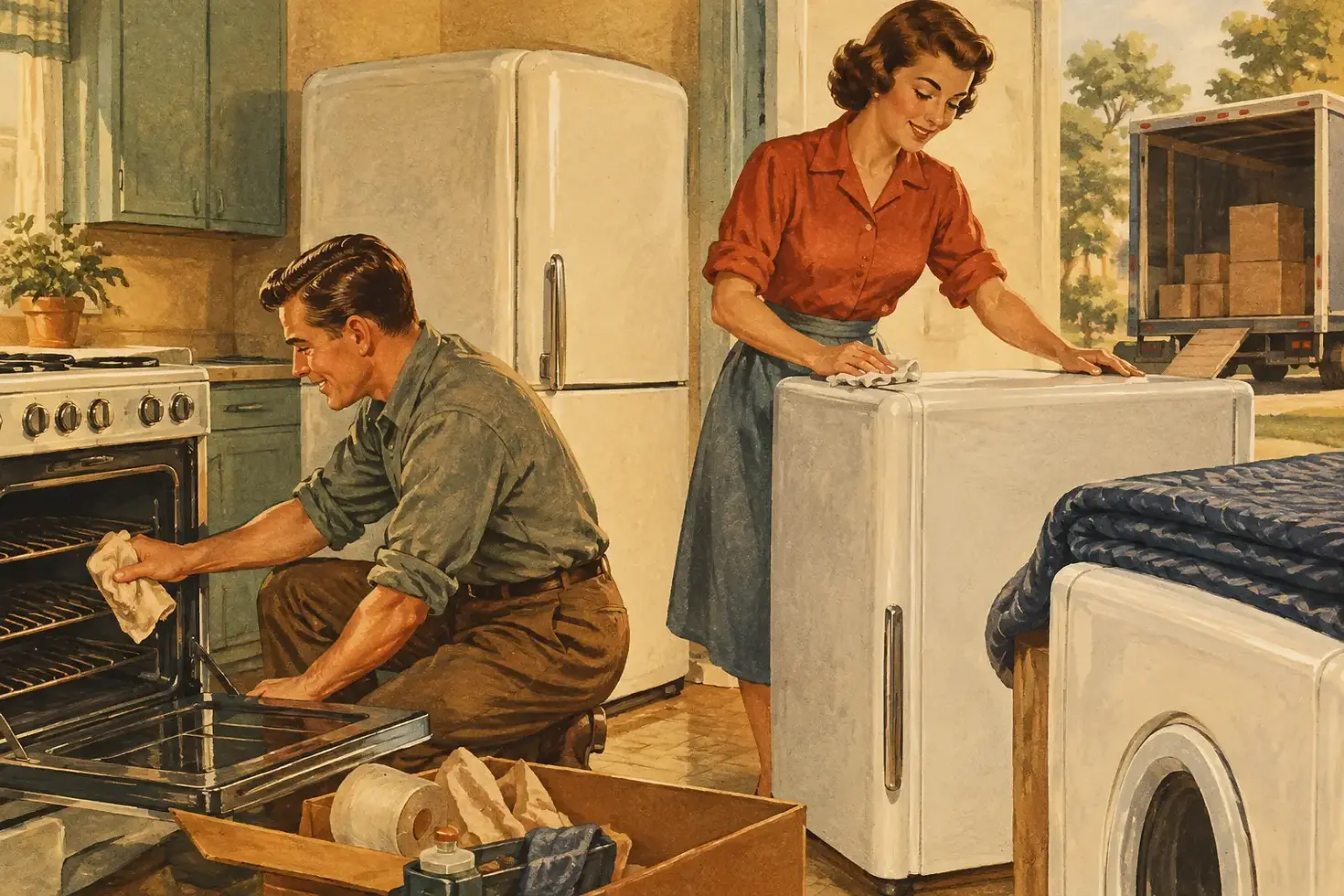
How to Prepare Appliances Before Moving Day

A refrigerator that was not defrosted can leave a trail of water through the house. A washing machine with loose hoses can leak in the truck. Those are the kinds of moving-day problems that are easy to prevent when you know how to prepare appliances before the crew arrives.
Appliances are heavy, awkward, and often connected to water, gas, or electrical lines. A little preparation protects your home, your belongings, and the appliance itself. Whether you are making a local Killeen move, heading across Texas, or preparing for a PCS relocation, start this process several days before moving day instead of trying to handle it all at the last minute.
How to Prepare Appliances for a Move
The first step is deciding which appliances are actually coming with you. Many apartments include a refrigerator, range, dishwasher, washer, or dryer, so check your lease before you pay to move something that belongs to the property. If you are selling a home, confirm which appliances are included in the sale agreement.
Once you know what is moving, read each owner's manual if you still have it. The manual may list specific transportation instructions, including whether the unit must stay upright or whether shipping bolts are required. If you do not have the manual, the manufacturer’s customer support line can usually confirm the basics.
Take clear photos of each appliance before it is disconnected. Photograph the front, sides, cords, hoses, and any existing dents or scratches. This gives you a record of its condition and makes reconnecting easier in the new home.
Most appliances should be emptied, cleaned, disconnected, and completely dry before loading. Do not leave food, dishes, laundry, or loose accessories inside. Weight shifts in transit, and a loose glass shelf or dryer rack can quickly become broken.
Plan for utility disconnection
Electric appliances can generally be unplugged once they are powered down. Water lines should be shut off at the valve before hoses are removed. Keep a towel and a shallow pan nearby because even a drained line can hold a small amount of water.
Gas appliances need more caution. Do not disconnect a gas range, gas dryer, or other gas-powered appliance unless you are qualified to do so. Arrange for a licensed professional or your utility provider to disconnect and cap the line properly. The same rule applies at the destination: have the appliance connected by a qualified professional before using it.
If an appliance has an ice maker, water dispenser, or built-in filter, make sure the water supply is turned off well in advance. Removing the line too quickly can create a mess and damage flooring.
Preparing a Refrigerator or Freezer
Refrigerators need the most lead time. Begin at least 24 hours before the move, and give yourself 48 hours if there is a thick layer of frost in the freezer.
First, use up, donate, or pack the food. Perishable groceries should travel in coolers, not inside the refrigerator. Then unplug the unit and disconnect the ice maker water line if it has one. Remove the water filter if your manufacturer recommends it, and empty the ice bin.
Allow the refrigerator and freezer to defrost fully. Place towels around the base and check them regularly. After the ice has melted, wipe every surface dry with a clean cloth. A refrigerator that is closed while damp can develop mildew and unpleasant odors fast, especially during a long-distance move in Texas heat.
Remove glass shelves, drawers, and loose bins when possible. Wrap those pieces separately and label them so they do not get misplaced. Secure the doors with moving straps or tape designed for moving, but do not use strong adhesive tape directly on finished surfaces. It can leave residue or pull away the finish.
Keep the refrigerator upright during transport whenever possible. If it must be laid on its side because of space limitations, ask the manufacturer or a qualified appliance technician for guidance. Once it arrives, it may need to stand upright for several hours before being plugged in. That waiting period allows compressor oil to settle back into place.
Preparing a Washer and Dryer
Washers are heavy because of the internal drum and motor, and they can cause serious water damage if they are not drained properly. Run a final empty cycle if needed, then turn off both water valves. Disconnect the hot and cold hoses, drain them into a bucket, and dry them before placing them in a labeled bag.
Many front-load and top-load washers need transit bolts to keep the drum from shifting during transportation. These bolts often came with the washer, but replacements may be available from the manufacturer if they are missing. Moving a washer without the proper bolts can damage the suspension system.
Clean the detergent dispenser, wipe down the drum, and leave the washer door open long enough for it to dry. Before the move, secure the door and tape the power cord to the back of the machine without placing adhesive directly on the finish.
For an electric dryer, clean out the lint trap and disconnect the vent hose. Vacuum any lint around the vent opening if you can safely reach it. Lint buildup is a fire risk, and moving is a good time to clear it out.
For a gas dryer, have a qualified professional disconnect the gas line. Do not treat it like a standard plug-and-go appliance. The dryer vent hose can be disconnected after the gas line is handled, then packed with any clamps and accessories in a labeled bag.
Preparing Stoves, Dishwashers, and Small Appliances
A dishwasher needs to be emptied and run through a final cycle before moving. Shut off the water supply, disconnect the power and water lines, and allow the inside to dry completely. Remove utensil baskets and racks if they are loose, or secure them so they cannot rattle around.
Electric ranges should be cleaned, unplugged, and allowed to cool well before moving day. Remove oven racks, burner grates, and glass components, then wrap them separately. If you have a gas range, schedule professional disconnection. Never move it with the gas line attached.
Small appliances deserve attention too. Coffee makers, air fryers, microwaves, blenders, stand mixers, and countertop ice makers should be cleaned and dried before packing. Empty water reservoirs, remove loose parts, and pack cords separately or secure them against the appliance. Original boxes are helpful, but a sturdy box with enough cushioning works well when the original packaging is gone.
Microwaves are usually best packed as a separate box item unless they are built in. For built-in microwaves, wall ovens, or specialty appliances, it may be worth having a technician remove them before the move. That adds an extra cost, but it can prevent cabinet damage, wiring issues, and a stressful installation problem later.
Make the Move Safer for Everyone
A prepared appliance still needs careful handling. Measure doorways, hallways, stair landings, and the appliance itself before moving day. Removing doors from the appliance may help in tight spaces, but keep all hardware in a labeled bag taped to the wrapped appliance or packed in a clearly marked box.
Clear a path from the appliance to the truck. Remove rugs, pet bowls, toys, and anything else that could create a trip hazard. Protect floors and door frames, especially when moving heavy items like refrigerators, washers, dryers, and ranges.
Tell your movers about every large appliance when requesting a quote or scheduling an in-home survey. Details matter: Is there a second-floor laundry room? A narrow hallway? A refrigerator with French doors? A gas dryer that still needs disconnection? Clear information helps the crew bring the right equipment and plan enough time for safe loading.
LoadMaster Moving Service regularly helps families move heavy household items, but the best results come from teamwork. Customers handle utility disconnection and appliance prep, while the moving crew focuses on protecting, lifting, loading, and placing items with care.
At the new home, let appliances sit, settle, and reconnect properly before you put them back to work. A few patient hours before plugging in a refrigerator or running the first load of laundry can save you from a repair bill and give your new place a cleaner, calmer start.


Preparing appliances before moving day involves more than simply unplugging them; refrigerators, washing machines, dryers, and other large appliances should be cleaned, disconnected, secured, and packed properly to prevent damage during transportation. For seniors, these preparations can be especially challenging because heavy lifting and safely disconnecting bulky appliances may require extra assistance. If you’re planning a move in Calgary, Senior Movers Calgary from Real Estate Movers can provide practical support with handling and transporting household belongings, helping make the moving process safer and less stressful.